Geeksdigit Team
Keeping your computer cool is one of the most important parts of maintaining performance, stability, and long-term hardware health. Whether you use your Windows 11 PC for gaming, office work, video editing, or casual browsing, your system’s internal fans play a critical role in preventing overheating. However, many users experience issues such as excessively loud fan noise, overheating, poor airflow, or fans running at full speed even during simple tasks. Learning how to control fan speed in Windows 11 can help you create a quieter experience, improve thermal efficiency, and even extend the lifespan of your hardware components.
Fan speed management is not just about reducing noise. Proper fan settings can also ensure your CPU, GPU, and motherboard stay within safe operating temperatures, especially during demanding applications. Some systems allow detailed fan adjustments directly through BIOS or UEFI firmware, while others provide manufacturer software or third-party tools for customization. In some cases, Windows 11 power settings can also indirectly affect cooling performance.
This guide explains all the practical methods to control fan speed in Windows 11 safely and effectively. Whether you own a laptop or desktop, this detailed walkthrough will help you optimize cooling without sacrificing performance.
Understanding Fan Speed Control in Windows 11
Every modern PC contains cooling fans designed to regulate internal temperatures by moving hot air out and cool air in. The primary components that rely on fans include the processor (CPU), graphics card (GPU), power supply unit (PSU), and system chassis. Windows 11 itself does not include direct fan speed controls for most systems because fan management is usually handled by the motherboard firmware or hardware controllers.
Fan speeds are typically measured in RPM (revolutions per minute), and system sensors automatically adjust RPM based on current temperatures. For example, when your CPU is under heavy load during gaming or rendering, the temperature rises, prompting fans to spin faster. When the workload decreases, fans slow down.
Desktop PCs often offer more flexibility because motherboards usually support customizable fan curves. Laptops may have more restrictions due to compact designs and manufacturer limitations. Some brands include dedicated thermal management software, but many ultrabooks or budget laptops may offer only limited options.
It is essential to understand that setting fan speeds too low can increase temperatures dangerously, potentially causing throttling, instability, or hardware damage. On the other hand, overly aggressive fan curves can create unnecessary noise. The goal is to find the right balance between cooling and acoustics.
Check Current System Temperatures Before Adjusting Fan Speed
Before making any changes, you should first understand your system’s current thermal performance. Monitoring temperatures helps determine whether fan speed adjustments are necessary.
Start by opening Task Manager in Windows 11 using Ctrl + Shift + Esc and checking CPU usage. High CPU activity from background applications can cause fans to ramp up unnecessarily. You should also inspect your PC physically for dust accumulation, blocked vents, or poor airflow.
For more advanced monitoring, many users rely on BIOS temperature readings or hardware tools such as manufacturer utilities. These can show CPU and GPU temperatures, helping you determine if your cooling system is underperforming.
Typical safe temperature ranges include:
- Idle CPU: 30–50°C
- Heavy load CPU: 70–85°C
- Idle GPU: 30–55°C
- Heavy load GPU: 65–85°C
If temperatures regularly exceed these ranges, adjusting fan settings may help.
Method 1: Control Fan Speed Through BIOS or UEFI
The most reliable and direct way to control fan speed is through your motherboard’s BIOS or UEFI settings. This method works independently of Windows and provides low-level hardware control.
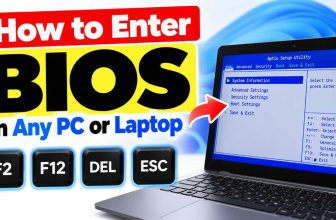
To access BIOS in Windows 11:
- Open Settings
- Go to System > Recovery
- Under Advanced Startup, click Restart Now
- Select Troubleshoot > Advanced Options > UEFI Firmware Settings
- Click Restart
Once inside BIOS, look for sections such as:
- Hardware Monitor
- Fan Control
- Q-Fan Control (ASUS)
- Smart Fan (Gigabyte)
- Fan Tuning
- Thermal Management
Most systems offer preset profiles like:
- Silent Mode
- Standard Mode
- Performance Mode
- Turbo Mode
- Custom Curve
Custom fan curves allow you to define specific RPM percentages based on temperature thresholds. For example:
- 30°C = 20% fan speed
- 50°C = 40%
- 70°C = 70%
- 85°C = 100%
Silent profiles prioritize low noise, while performance modes maximize cooling. BIOS control is generally the safest option because it works directly with hardware sensors.
Method 2: Use Manufacturer Fan Control Software
Many major laptop and desktop brands provide official utilities that allow users to manage thermal profiles without entering BIOS.
Common examples include:
- Dell Power Manager
- HP Command Center
- Lenovo Vantage
- ASUS Armoury Crate
- MSI Center
- Acer NitroSense
These applications often provide simplified profiles such as:
- Quiet
- Balanced
- Performance
- Turbo
Manufacturer software is ideal for users who want safe, easy adjustments without risking unsupported settings. These tools are designed specifically for your hardware, reducing compatibility concerns.
For example, gaming laptops often include “Turbo” mode for maximum cooling during gaming sessions and “Silent” mode for everyday productivity.
The main drawback is limited advanced customization. Some tools may not allow detailed fan curve editing, but they are generally safer for beginners.
Method 3: Third-Party Fan Control Software
If your system lacks BIOS options or OEM software, third-party applications can provide advanced control.
Popular fan control tools include:
- Fan Control by Rem0o
- SpeedFan
- Argus Monitor
- MSI Afterburner (mainly GPU)
Fan Control by Rem0o has become particularly popular due to modern compatibility and detailed customization options. It allows users to create highly specific fan curves based on multiple sensor inputs.
Benefits include:
- Advanced customization
- Multi-fan synchronization
- GPU and CPU sensor integration
- Better noise optimization
However, third-party tools may not work with all motherboards or laptops. Improper settings can also cause instability or overheating if configured incorrectly.
Always download software from official sources and monitor temperatures carefully after making adjustments.
Method 4: Adjust Windows 11 Power Settings
Although Windows 11 does not directly control fan RPM, power settings can influence thermal behavior.
To adjust power settings:
- Open Settings
- Go to System > Power & Battery
- Select Power Mode
Options include:
- Best Power Efficiency
- Balanced
- Best Performance
Lower power modes reduce CPU power consumption, generating less heat and causing fans to spin less aggressively.
Advanced users can also modify processor cooling policies:
- Open Control Panel
- Go to Power Options
- Select Change Plan Settings
- Click Advanced Power Settings
- Expand Processor Power Management
- Adjust System Cooling Policy
Choices include:
- Passive Cooling: Lowers CPU speed before increasing fan speed
- Active Cooling: Increases fan speed first
Passive mode can reduce noise, while active mode prioritizes cooling.
Improve Cooling Through Hardware Maintenance
Sometimes loud fans are caused by poor maintenance rather than incorrect settings.
Important maintenance practices include:
- Cleaning dust from vents and fans
- Replacing dried thermal paste
- Improving case airflow
- Using laptop cooling pads
- Organizing internal cables
- Ensuring proper ventilation around the PC
Dust buildup is one of the most common causes of overheating and fan overactivity. Even the best fan settings cannot compensate for blocked airflow.
For laptops, cooling pads can significantly improve airflow, especially during gaming or heavy workloads.
Best Fan Speed Profiles for Different Uses
Your ideal fan settings depend on how you use your computer.
Everyday Tasks
For web browsing, streaming, and office work:
- Prioritize quieter operation
- Lower fan curves
- Balanced or Silent profiles
Gaming and Heavy Workloads
For gaming, editing, or rendering:
- Higher RPM
- Aggressive cooling curves
- Performance or Turbo mode
Overclocking
For enthusiasts:
- Maximum cooling
- Custom fan curves
- Constant temperature monitoring
Aggressive cooling is especially important when overclocking because additional voltage dramatically increases heat output.
Troubleshooting Common Fan Problems
Fan Runs Constantly at High Speed
Possible causes:
- High CPU usage
- Malware
- Dust buildup
- BIOS misconfiguration
- Outdated drivers
Fan Not Spinning Properly
Potential issues:
- Fan failure
- Loose connections
- Sensor malfunction
- Motherboard problems
Software Cannot Detect Fans
This may occur because:
- BIOS restrictions
- Unsupported controllers
- Laptop hardware limitations
In such cases, BIOS or OEM software is often the best solution.
Important Safety Tips
When adjusting fan speeds, safety should always come first.
- Never disable fans completely
- Monitor temperatures regularly
- Keep CPU/GPU temperatures within safe ranges
- Save BIOS defaults before changes
- Avoid unknown software
- Increase speeds gradually
- Test under load after modifications
Overheating can cause severe damage, including thermal throttling, crashes, and shortened hardware lifespan.
Final Thoughts
Learning how to control fan speed in Windows 11 can significantly improve your computing experience by reducing noise, improving cooling efficiency, and protecting your hardware. Whether you choose BIOS settings, manufacturer utilities, third-party software, or Windows power plans, each method offers different levels of control depending on your device.
For most users, BIOS or official manufacturer tools provide the safest and easiest options. Advanced users may prefer custom fan curves through third-party applications for greater precision. At the same time, regular maintenance such as dust cleaning and thermal management should never be overlooked.
By carefully balancing cooling performance with acoustic comfort, you can keep your Windows 11 system running smoothly for years while maintaining optimal temperatures under any workload.
Frequently Asked Questions
Can I control fan speed on all Windows 11 PCs?
Not all systems allow manual fan control. Desktops generally offer more options than laptops.
Is third-party fan software safe?
Yes, if downloaded from trusted sources and used carefully.
Why is my Windows 11 fan so loud?
Common causes include high CPU load, dust buildup, poor airflow, or aggressive cooling settings.
What is the best fan speed for gaming?
Higher fan speeds with performance-focused curves are recommended to maintain safe temperatures during gaming.