Geeksdigit Team
Few tech problems are more frustrating than pressing your laptop’s power button and getting absolutely nothing in response. Whether you rely on your laptop for work, school, gaming, entertainment, or personal projects, a laptop that refuses to turn on can feel alarming. In some cases, the issue may be as simple as a drained battery or faulty charger, while in others, deeper hardware or software problems may be responsible.
The good news is that a laptop not turning on does not always mean it is permanently damaged. Many startup issues can be diagnosed and resolved at home without expensive repairs. Understanding why your laptop fails to power on is the first step toward fixing it.
This comprehensive guide explains the most common reasons a laptop may not turn on, along with 9 practical troubleshooting solutions that can help restore functionality. Whether your screen stays black, your power light blinks, or there are no signs of power at all, these methods can help you identify and potentially solve the problem.
Common Reasons Why A Laptop Won’t Turn On
There are many possible causes for startup failure, ranging from simple external issues to internal hardware malfunctions.
Typical causes include:
- Dead battery
- Faulty power adapter
- Damaged charging port
- Loose RAM
- Overheating
- Corrupted operating system
- Display failure
- BIOS issues
- Motherboard damage
- Power button malfunction
Because multiple components are involved in the startup process, troubleshooting should be done systematically.
Signs Of Different Startup Problems
Before fixing the issue, pay attention to symptoms.
No lights or sounds:
- Battery drained
- Charger failure
- Motherboard issue
Power light on but black screen:
- Display issue
- RAM problem
- GPU problem
- BIOS corruption
Fan spins briefly then shuts off:
- Overheating
- Hardware protection
- Power instability
Beeping sounds:
- Hardware diagnostic codes
- RAM or motherboard issues
Recognizing these clues can speed up diagnosis.
Fix 1: Check The Power Source
The most common cause of laptop startup failure is power-related.
Steps:
- Ensure charger is securely connected
- Check wall outlet functionality
- Try another outlet
- Inspect charger cable for damage
- Verify charging LED indicator
- Use original manufacturer charger if possible
If removable battery:
- Remove battery
- Plug in charger only
- Attempt startup
A faulty charger is often overlooked but can be the simplest fix.
Fix 2: Perform A Hard Reset
Residual electrical charge can sometimes prevent startup.
Steps:
- Turn off laptop
- Disconnect charger
- Remove battery (if removable)
- Hold power button for 15–30 seconds
- Reconnect charger
- Attempt startup
This process clears temporary electrical issues.
Benefits:
- Resets hardware state
- Clears static charge
- Often resolves boot loops
Fix 3: Check The Display
Sometimes the laptop powers on, but the screen does not display output.
Signs:
- Keyboard lights active
- Fan running
- Power light on
- Black display
Solutions:
- Increase brightness
- Connect external monitor
- Use display toggle key (Fn + display key)
- Restart graphics driver (Windows + Ctrl + Shift + B)
If external display works, the internal screen may be faulty.
Fix 4: Inspect Battery Health
A severely degraded battery may prevent startup.
Steps:
- Remove battery if possible
- Start laptop using charger only
- Replace battery if system powers on
Battery warning signs:
- Swelling
- Overheating
- Charging failure
- Rapid power loss
Older batteries commonly cause startup issues.
Fix 5: Reseat RAM Modules
Loose or faulty memory can prevent booting.
Steps:
- Power off
- Disconnect charger
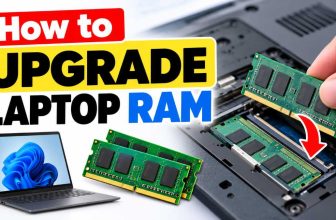
- Open RAM compartment
- Remove RAM carefully
- Reinsert firmly
- Try booting again
Symptoms of RAM issues:
- Black screen
- Beeping
- Reboot loops
If multiple RAM sticks exist, test individually.
Fix 6: Disconnect External Devices
Peripheral devices can interfere with startup.
Remove:
- USB drives
- External hard drives
- Printers
- Docking stations
- SD cards
- External monitors
Then restart.
Why this helps:
- Eliminates boot conflicts
- Removes faulty peripherals
- Simplifies startup environment
Fix 7: Enter BIOS Or Recovery Mode
If hardware powers on but Windows fails to load, BIOS may still function.
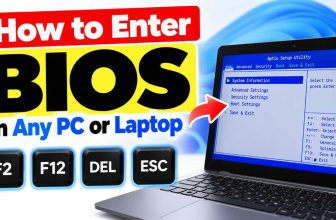
Common BIOS keys:
- F2
- Delete
- ESC
- F10
If BIOS opens:
- Hardware likely functional
- Boot order may be wrong
- OS corruption possible
Check:
- SSD/HDD detection
- Boot settings
- System diagnostics
This can help narrow down the cause.
Fix 8: Check For Overheating
Overheating can trigger protective shutdowns.
Causes:
- Dust buildup
- Blocked vents
- Failed fan
- Dried thermal paste
Solutions:
- Clean vents
- Use compressed air
- Place on hard surface
- Allow system to cool
Warning signs:
- Hot chassis
- Loud fans
- Sudden shutdowns
- Startup failure after heat exposure
Thermal protection is common in modern laptops.
Fix 9: Seek Professional Hardware Repair
If all troubleshooting fails, internal hardware may be damaged.
Potential failures:
- Motherboard
- CPU
- Power IC
- Charging port
- SSD/HDD
- GPU
Professional diagnosis may include:
- Voltage testing
- Component replacement
- Board repair
- BIOS flashing
Common repair scenarios:
- Liquid damage
- Physical drops
- Power surges
- Component aging
In such cases, expert service is often required.
Additional Troubleshooting Tips
Listen for sounds:
- Fans
- Beeps
- Drive activity
Check indicator lights:
- Charging LED
- Caps Lock
- Keyboard backlight
Use manufacturer diagnostics:
Brands like Dell, HP, Lenovo, and ASUS often include built-in tests.
How To Prevent Future Startup Problems
Maintain battery health:
- Avoid full discharge
- Use proper chargers
- Monitor charging cycles
Improve cooling:
- Clean fans
- Replace thermal paste
- Use cooling pads
Protect hardware:
- Avoid liquid exposure
- Use surge protectors
- Handle carefully
Software maintenance:
- Update BIOS
- Install Windows updates
- Scan for malware
Preventive care can reduce major failures.
Laptop Brand-Specific Considerations
HP:
- Hard reset often effective
Dell:
- Diagnostic LEDs useful
Lenovo:
- Novo button may access recovery
ASUS:
- BIOS recovery options available
Apple MacBooks:
- SMC reset may help
Checking manufacturer-specific recovery methods can be valuable.
When Data Recovery Matters
If your laptop won’t start but storage is intact:
- Remove SSD/HDD
- Use external enclosure
- Recover files on another computer
This can preserve important data before repairs.
Is Repair Worth It?
Consider:
- Laptop age
- Repair cost
- Hardware specs
- Warranty status
Repair may be worthwhile if:
- Device is modern
- Minor issue
- Valuable specifications
Replacement may be better if:
- Major motherboard damage
- Outdated hardware
- Excessive repair cost
Final Thoughts
A laptop that won’t turn on can be stressful, but in many cases, the issue can be diagnosed and resolved without replacing the entire device. Power problems, battery failures, RAM issues, overheating, and display malfunctions are among the most common causes, and systematic troubleshooting can often restore your system.
By following these 9 effective fixes—checking power, performing hard resets, inspecting hardware, testing displays, and addressing thermal issues—you can often solve startup failures yourself. If hardware damage is involved, professional repair may still recover the laptop or preserve valuable data.
Understanding the underlying causes of startup failure not only helps fix immediate issues but also empowers you to better maintain your device long-term. With proper care, regular maintenance, and timely troubleshooting, you can reduce the likelihood of future power-on problems and keep your laptop running reliably for years.