Geeksdigit Team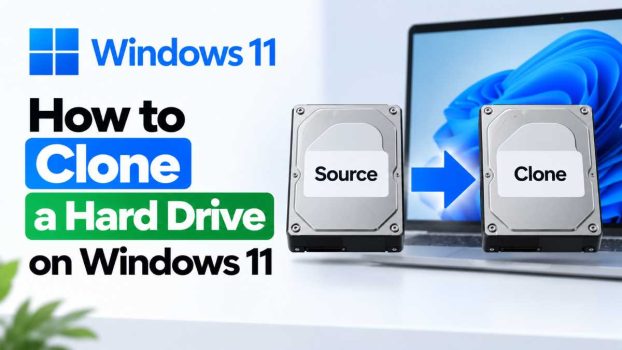
Whether you’re upgrading from a sluggish hard disk drive (HDD) to a fast solid-state drive (SSD), replacing a dying drive before it fails completely, or simply preparing for a larger storage upgrade, cloning your hard drive is one of the most efficient ways to move your entire system — operating system, installed programs, settings, and personal files — without the hassle of a fresh Windows installation.
Cloning creates an exact, bootable copy of your source drive onto a new destination drive. Unlike a simple file copy or backup, a clone preserves the partition structure, boot files, and system configuration so that when you swap drives, Windows 11 boots up exactly as it did before — just faster or with more space.

This guide walks through why you might want to clone a drive, what to prepare beforehand, several reliable methods for cloning on Windows 11, and answers to common questions people run into during the process.
Why Clone Instead of Reinstalling Windows?
Reinstalling Windows from scratch might seem like the “cleaner” option, but it comes with real downsides: hours spent reinstalling every application, reconfiguring settings, restoring files from backups, and hunting down license keys. Cloning avoids all of that. Your desktop, browser bookmarks, saved passwords, installed software, and file structure remain untouched — the new drive simply becomes a faster or larger version of your old one.
Cloning is especially popular when:
- Upgrading from a mechanical HDD to an SSD or NVMe drive for a major speed boost
- Moving to a larger-capacity drive as you run out of space
- Replacing a drive showing signs of failure (unusual noises, frequent errors, SMART warnings)
- Setting up a backup or spare drive that’s ready to boot immediately if needed
What You’ll Need Before You Start
Before diving into the cloning process, a little preparation goes a long way toward avoiding headaches:
- A destination drive with equal or greater storage capacity than the used space on your source drive. If you’re cloning a 500GB drive that’s using 200GB, your destination drive needs at least 200GB of free space (though matching or exceeding total capacity is safest).
- A way to connect the destination drive to your PC — either an internal bay, a SATA-to-USB adapter/enclosure, or a docking station, especially useful for laptops with only one drive bay.
- Cloning software — Windows doesn’t include a built-in cloning tool, so you’ll need third-party software (several free options are covered below).
- A full backup of important files as a safety net. Cloning is generally safe, but interruptions (power loss, software crashes) can corrupt data, so backing up irreplaceable files first is simple insurance.
- Enough battery or a stable power connection if cloning on a laptop, since an interrupted clone can leave both drives unusable.
Methods to Clone a Hard Drive on Windows 11
Method 1: Using Macrium Reflect (Free)
Macrium Reflect is one of the most trusted disk-cloning tools, offering a reliable free tier for personal use.
Steps:
- Download and install Macrium Reflect Free from the official website.
- Connect your destination drive to your PC.
- Open Macrium Reflect and locate your source disk in the main window.
- Click “Clone this disk” under the source disk’s options.
- Select your connected destination drive as the target.
- Review the partition layout Macrium proposes — it typically clones all partitions automatically, including the recovery and EFI system partitions needed for booting.
- Click “Next”, review the summary, and click “Finish” to begin cloning.
- Wait for the process to complete — this can take anywhere from 20 minutes to a few hours depending on drive size and connection speed (USB 3.0 or faster is strongly recommended).
Once finished, shut down your PC, swap the drives (if replacing) or adjust your boot order in BIOS/UEFI to point to the new drive, and restart.
Method 2: Using EaseUS Todo Backup
EaseUS Todo Backup offers an intuitive interface that’s popular with users who want a straightforward, guided cloning experience.
Steps:
- Download and install EaseUS Todo Backup (the free edition supports basic cloning).
- Connect the destination drive.
- Open the app and select the “Clone” tool from the main menu.
- Choose your source disk (the drive with Windows 11 installed).
- Select the destination disk you connected.
- Use the “Optimize for SSD” option if you’re cloning to a solid-state drive — this enables proper alignment for better performance and longevity.
- Confirm the settings and click “Proceed” to start cloning.
- Once complete, restart your PC and change the boot order in BIOS/UEFI if the new drive doesn’t boot automatically.
Method 3: Using the Manufacturer’s Cloning Software
If you purchased a new SSD from a major manufacturer (Samsung, Crucial, Western Digital, Kingston, Seagate, etc.), there’s a good chance they offer free proprietary cloning software designed specifically for their drives:
- Samsung Data Migration (for Samsung SSDs)
- Crucial Storage Executive
- Western Digital Acronis True Image for Western Digital
- Kingston’s Acronis-based cloning tool
General steps:
- Download the cloning tool matching your new drive’s brand.
- Connect the new drive to your PC.
- Open the software and select your current Windows drive as the source.
- Select the new drive as the destination.
- Start the clone and wait for it to finish.
- Physically replace the old drive with the new one (for laptops, this usually means opening the back panel; for desktops, swapping SATA/NVMe connections).
These tools are often optimized for their specific hardware and can be the fastest, most reliable option when available.
Method 4: Using Windows’ Built-In Disk Management for a Partial Approach
While Windows 11 doesn’t include a true disk-cloning feature, Disk Management combined with manual backup and restore can work for advanced users comfortable with more manual steps:
- Open Disk Management (right-click the Start button and select it).
- Use File History or Windows Backup to create a system image of your current drive via Control Panel > Backup and Restore (Windows 7) — yes, this legacy tool still exists in Windows 11 and creates a full system image.
- Connect your new destination drive.
- Boot from Windows 11 installation media, choose “Repair your computer”, then “System Image Recovery”.
- Select the system image you created and restore it to the new drive.
This method is more involved and less user-friendly than dedicated cloning software, but it avoids installing third-party tools if that’s a priority for you.
After Cloning: Final Steps
Once the clone finishes, a few final steps ensure everything works smoothly:
- Verify the boot order in your BIOS/UEFI settings so your PC boots from the new drive.
- Test the new drive by booting into Windows and checking that your files, applications, and settings are all present.
- Check disk health using tools like CrystalDiskInfo to confirm the new drive is functioning correctly.
- Securely wipe or repurpose the old drive once you’ve confirmed everything works — it can serve as a backup drive or external storage.
- Enable TRIM if you cloned to an SSD, which helps maintain performance over time (most cloning tools and Windows 11 handle this automatically).
Conclusion
Cloning a hard drive on Windows 11 is a practical, time-saving way to upgrade your storage or replace a failing drive without starting from scratch. With free tools like Macrium Reflect and EaseUS Todo Backup, or manufacturer-specific software for new SSDs, the process is accessible even to non-technical users. The key is preparation: choosing a properly sized destination drive, backing up important data, and following each step carefully to avoid interruptions.
Once cloned, your new drive will boot exactly like your old one — just faster, larger, or more reliable, depending on your reason for upgrading. With the right tool and a bit of patience, you can have your system running on new hardware in under an hour, with zero reinstallation required.
Frequently Asked Questions
1. Do I need to buy cloning software, or is there a free option?
Free options are widely available and sufficient for most home users. Macrium Reflect Free and EaseUS Todo Backup (free edition) both support full disk cloning at no cost. Additionally, if you bought a new drive from a major manufacturer, their bundled cloning software is typically free and often the easiest option since it’s tailored to that specific drive.
2. Can I clone a larger drive onto a smaller one?
Yes, as long as the used space on your source drive is smaller than the total capacity of the destination drive. For example, cloning a 1TB drive that only uses 150GB onto a 256GB SSD works fine. Most cloning software will warn you or refuse to proceed if the destination doesn’t have enough room for your actual data.
3. Will cloning affect my Windows 11 license or activation?
No. Since cloning creates an exact copy of your existing drive — including all system files tied to your hardware — Windows 11 will typically recognize the new drive as the same installation and remain activated. Issues can occasionally arise if you also change major hardware like the motherboard at the same time, but a straightforward drive swap rarely triggers reactivation problems.
4. How long does cloning a hard drive typically take?
Cloning time depends on the amount of data being copied, the speed of both drives, and your connection method. A typical 250–500GB drive with moderate data usage might take 30 minutes to 2 hours over USB 3.0. Using an internal SATA or NVMe connection is generally faster than an external USB enclosure. Larger drives with more data can take several hours, so it’s best to start the process when you don’t need your PC for a while.



![How to Boot into Windows 11 Safe Mode [5 Easy Methods]](https://www.geeksdigit.com/wp-content/uploads/2026/09/How-to-Boot-into-Windows-11-Safe-Mode-336x220.jpg)