Geeksdigit Team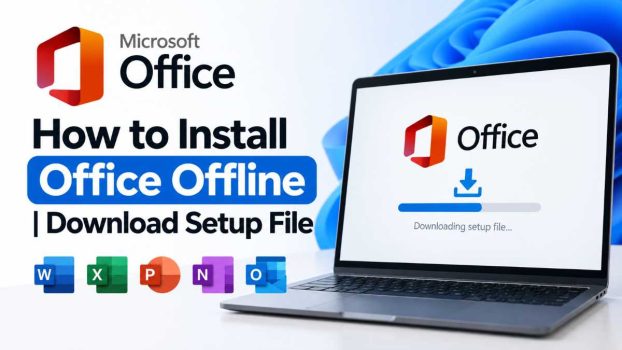
If you’ve ever tried installing Microsoft Office on a slow internet connection, across multiple computers, or in a location with unreliable connectivity, you already know the frustration. The default Office installer streams files from the internet as it installs, which means a dropped connection can stall or corrupt your setup halfway through.
The good news: Microsoft provides official, legitimate ways to download a full offline installer so you can install Office without needing an active internet connection during setup. This guide walks through exactly how to do that — safely, using only Microsoft’s own tools — whether you’re a home user with a personal subscription or an IT admin deploying Office to dozens of machines.
Why Offline Installation Is Worth Knowing About
Before diving into the steps, it helps to understand the difference between the two installation types Microsoft offers.
Click-to-Run (the default method) downloads a small streaming installer. It starts installing basic functionality within minutes while continuing to download the rest of the suite in the background. This works well on fast, stable connections but can fail or need to restart if your internet drops mid-install.
Offline installation downloads the complete installation package to your computer first, then installs from local files. This is slower to start (since you’re waiting for a full download before anything installs) but far more reliable once you begin, and it lets you reuse the same installer on multiple machines without re-downloading each time.
Offline installation is particularly useful if you:
- Have a data-capped or unstable internet connection
- Need to install Office on several computers in the same office or household
- Are setting up a computer that won’t have internet access for a while after purchase
- Work in IT and need a repeatable, silent installation across many devices
- Want a backup installer in case you need to reinstall later without redownloading everything
Method 1: Offline Installer for Personal Microsoft 365 Subscribers
If you already have a Microsoft 365 subscription (Personal, Family, or a retail Office license like Office Home & Student), Microsoft lets you access an offline installer directly through your account. Here’s the full process.
Step 1: Sign in to your Microsoft account
Go to office.com or account.microsoft.com and sign in using the Microsoft account associated with your Office purchase or subscription. This is the same account you used when you bought or activated Office originally.
Step 2: Head to your Office / Services & subscriptions page
Once signed in, navigate to the “Install Office” or “Services & subscriptions” section. You should see your active Office or Microsoft 365 subscription listed, along with an install button.
Step 3: Look for advanced or “other” install options
Rather than clicking the main “Install Office” button (which triggers the standard Click-to-Run installer), look for a secondary link, usually labeled something like “Other install options” or “Advanced options.” This is the gateway to offline and language-specific installers.
Step 4: Choose your version and language
From the advanced options page, you can typically select:
- Version: 32-bit or 64-bit (64-bit is standard for modern Windows PCs with more than 4GB RAM)
- Language: Choose the display language you want Office to install in
- Release channel: For most personal users, the default “Current Channel” is appropriate
Step 5: Download and run the offline installer
After selecting your preferences, download the offline installer package. Depending on your platform, this might be an .exe file (Windows) or a .pkg/.img file (macOS). Once downloaded, run the file — because it’s a full offline package, installation will proceed using local files rather than pulling from the internet.
Step 6: Activate with your existing license
After installation completes, open any Office app (like Word or Excel) and sign in with your Microsoft account. Since your subscription or license is already tied to that account, Office will activate automatically without requiring a separate product key entry.
Important note: This method only works if you already have a paid, valid Microsoft 365 subscription or a purchased retail license. There’s no legitimate offline installer that grants you a working, fully licensed copy of Office for free — any site claiming otherwise is not a genuine Microsoft source.
Method 2: Offline Deployment for IT Admins and Businesses
If you’re responsible for installing Office across multiple machines in an office, school, or organization, Microsoft has a purpose-built tool for exactly this: the Office Deployment Tool (ODT).
The ODT lets you download the full Office source files once, then push installations to as many computers as you need — without each machine independently downloading gigabytes of data from Microsoft’s servers.
Step 1: Download the Office Deployment Tool
Search “Office Deployment Tool” directly on microsoft.com and download it from the official Microsoft Download Center. Note that this tool itself is small (it’s not the Office suite — it’s the utility that fetches and installs Office).
Step 2: Create a configuration XML file
The ODT uses an XML configuration file to determine which Office products, apps, languages, and update channel to install. A simple configuration file might specify:
- The product ID (e.g., Microsoft 365 Apps for enterprise, or a specific Office 2024 SKU)
- Architecture (32-bit or 64-bit)
- Language(s) to include
- Which individual apps to include or exclude (for example, excluding Access or Publisher if not needed)
Microsoft publishes a configuration generator tool online that creates this XML file for you through a simple web interface, which is far easier than writing it by hand.
Step 3: Download the Office source files locally
Open Command Prompt in the folder containing the ODT and configuration file, then run:
setup.exe /download configuration.xmlThis downloads the complete set of Office installation files to a local folder specified in your configuration. Depending on the products and languages selected, this can be several gigabytes.
Step 4: Install from the local source
Once downloaded, you can install Office on the local machine — or copy the downloaded folder to other computers on your network — and run:
setup.exe /configure configuration.xmlThis installs Office entirely from local files, with no internet connection required during setup on each individual machine.
Step 5: Activate via volume licensing or subscription
For organizational deployments, activation is typically handled through Microsoft 365 Apps for enterprise licensing, Volume Licensing, or KMS (Key Management Service) activation — depending on how your organization has set up its Microsoft agreement. Your IT department or Microsoft account representative can confirm which activation method applies.
This method is the standard, Microsoft-endorsed approach for anyone managing more than a handful of installations, and it’s widely documented in Microsoft’s own admin documentation.
Preparing Your Computer Before Installing Office
Regardless of which method you use, a few preparation steps will make the install smoother and reduce the chance of conflicts.
Remove old versions of Office first. Leftover files from a previous Office installation are one of the most common causes of installation errors. Microsoft provides an official “Support and Recovery Assistant” tool designed specifically to fully uninstall lingering Office components before a fresh install.
Check your system requirements. Modern versions of Office generally require:
- Windows 10 or later (or a recent macOS version for Mac installs)
- At least 4GB of RAM (more recommended for heavier use)
- Several gigabytes of free disk space
- A processor that matches your chosen architecture (32-bit or 64-bit)
Confirm your product key or subscription status. Whether you’re using the personal method or the deployment tool, you’ll need either a valid product key, an active Microsoft 365 subscription tied to your Microsoft account, or a volume license agreement for business installs.
Restart your computer after installation. This clears out temporary files and ensures all Office services register correctly with Windows or macOS.
A Word of Caution About “Free Offline Installer” Sites
If you search around for Office offline installers, you’ll inevitably run into blog posts, forums, and file-sharing sites promising a “free full version” or a direct download link to a cracked or pre-activated copy of Office. It’s worth being direct about this: these are not legitimate sources, and downloading from them carries real risk.
Common issues with these unofficial installers include:
- Malware bundled into the installer, sometimes disguised as legitimate setup files
- Modified activation files that can flag your system as compromised or make it vulnerable to security exploits
- No official support or updates, meaning security patches from Microsoft may never reach your installation
- Legal risk, since distributing or using unlicensed commercial software violates Microsoft’s terms of service and, in many jurisdictions, copyright law
The only reliable sources for Office installers are Microsoft’s own domains: microsoft.com, office.com, and account.microsoft.com, along with your organization’s internal deployment tools if you’re on a business or education plan. If a download link for Office appears anywhere else, treat it with suspicion.
Final Thoughts
Installing Office offline isn’t complicated once you know where to look — the key is going through Microsoft’s official channels rather than third-party “download” sites. For personal users, the advanced install options inside your Microsoft account give you everything you need. For IT admins managing multiple machines, the Office Deployment Tool offers a fast, repeatable, and fully supported way to roll out Office across an entire organization without repeated downloads eating up bandwidth.
Whichever method fits your situation, sticking to Microsoft’s official tools means you get a properly licensed, secure, and fully updatable copy of Office — without the risks that come with unofficial download sources.