Geeksdigit Team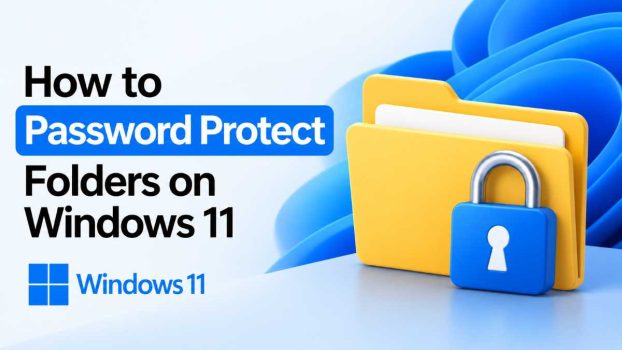
Windows 11 doesn’t include a simple, built-in “right-click and lock” option for folders the way some people expect. If you’ve ever tried to find a native password-protection feature for a specific folder, you’ve probably discovered that Microsoft left this particular convenience out of the operating system. That doesn’t mean you’re out of options, though. Whether you’re trying to keep tax documents away from prying eyes on a shared family computer, secure client files on a work laptop, or just add a layer of privacy to personal photos, there are several reliable ways to lock down a folder on Windows 11.
This guide walks through four practical methods for password protecting folders, ranging from free built-in tools to third-party software. Each approach has different strengths depending on how much security you need, whether you’re comfortable installing extra software, and what edition of Windows 11 you’re running. By the end, you’ll be able to pick the method that fits your situation and get your folder locked down in a few minutes.
Method 1: Compress the Folder into a Password-Protected ZIP File

The quickest and most accessible way to add password protection to a folder is to compress it into an archive using a tool like 7-Zip or WinRAR. Windows 11’s native ZIP compression doesn’t support passwords, so you’ll need a free third-party archiver for this.
Steps using 7-Zip:
- Download and install 7-Zip from the official website.
- Right-click the folder you want to protect.
- Select 7-Zip > Add to archive.
- In the Archive format dropdown, choose 7z or zip.
- Under the Encryption section, enter and confirm a password.
- If using the 7z format, choose the AES-256 encryption method for stronger security.
- Click OK to create the encrypted archive.
Once the archive is created, you can delete the original unprotected folder (after verifying the archive opens correctly with your password). Anyone trying to open the compressed file will be prompted for the password before they can view or extract its contents.
Pros: Free, fast, works on any edition of Windows 11, and the resulting file is portable — you can email it, upload it to cloud storage, or move it to a USB drive.
Cons: You have to compress and decompress the folder each time you want to access it, which adds friction if you use the files frequently. It’s also not designed for real-time editing of files inside.
Method 2: Use BitLocker to Encrypt an Entire Drive or Virtual Drive
BitLocker is Microsoft’s built-in encryption tool, but it’s designed to encrypt entire drives rather than individual folders. However, you can work around this limitation by creating a virtual hard disk (VHD) that acts as a separate drive, placing your sensitive folder inside it, and encrypting that virtual drive with BitLocker.
Steps to create and encrypt a virtual drive:
- Press Windows key + R, type
diskmgmt.msc, and press Enter to open Disk Management. - Click Action > Create VHD.
- Choose a location and size for the virtual disk, then select VHD or VHDX format.
- Once created, right-click the new disk in Disk Management and select Initialize Disk.
- Right-click the unallocated space, choose New Simple Volume, and follow the wizard to format it and assign a drive letter.
- Open File Explorer, right-click the new virtual drive, and select Turn on BitLocker.
- Choose Use a password to unlock the drive, set your password, and follow the prompts to complete encryption.
Now you can move your sensitive folder onto this virtual drive. Each time you want to access it, you’ll mount the VHD file and enter your password.
Note: BitLocker is available on Windows 11 Pro, Enterprise, and Education editions. Windows 11 Home users have access to a more limited feature called Device Encryption, which encrypts the whole system drive but doesn’t offer this kind of flexible, folder-specific setup.
Pros: Strong, industry-standard AES encryption; integrates natively with Windows; no third-party software required.
Cons: More technical setup than other methods; not available in the same form on Windows 11 Home; encrypts a virtual drive rather than a folder directly.
Method 3: Use Third-Party Folder Locking Software
If you want a more folder-centric experience — where you simply lock a specific folder in place without archiving or creating virtual drives — dedicated folder-lock applications are a good middle ground. Programs in this category typically let you select a folder, assign a password, and hide or restrict access to it directly from File Explorer.
Popular options include tools like Wise Folder Hider, Folder Lock, and GiliSoft File Lock Pro. While each has its own interface, the general workflow looks like this:
- Download and install a reputable folder-locking application.
- Open the program and create a master password when prompted.
- Add the folder you want to protect using the app’s “Add Folder” or “Hide Folder” function.
- The software will either hide the folder from normal view or block access until the correct password is entered.
- To access the folder later, reopen the application, enter your password, and unlock or unhide the folder.
Pros: Convenient for locking folders you access often, since there’s no need to compress or decompress files each time. Many tools also offer extra features like file shredding or encrypted vaults.
Cons: Relies on trusting a third-party developer with access to your files, and free versions often come with ads or limited features. Always research a program’s reputation and read recent reviews before installing anything that touches sensitive data, since the quality and safety of these tools varies widely.
Method 4: Use the Encrypting File System (EFS)
Windows includes a built-in feature called the Encrypting File System (EFS), which ties file and folder encryption to your Windows user account rather than a separate password you type each time. This method is available on Windows 11 Pro, Enterprise, and Education, but not on Windows 11 Home.
Steps to encrypt a folder with EFS:
- Right-click the folder you want to protect and select Properties.
- On the General tab, click Advanced.
- Check the box for Encrypt contents to secure data.
- Click OK, then Apply.
- Choose whether to apply the change to the folder only or to the folder, subfolders, and files.
Once encrypted, the folder will only be accessible while you’re logged into the Windows account that encrypted it. Other user accounts on the same PC won’t be able to open the contents, even with administrator access, unless they have the correct decryption certificate.
Pros: No extra password to remember, since access is tied to your Windows login; built into the OS with no extra installation.
Cons: If you forget your Windows password, reinstall Windows, or lose your encryption certificate/key, the files can become permanently inaccessible. It’s strongly recommended to back up your EFS certificate right after enabling this feature, using the Certificate Manager (certmgr.msc) to export it to a safe location.
Conclusion
Windows 11 doesn’t hand you a one-click way to lock a folder, but between compressing folders into encrypted ZIP or 7z files, creating an encrypted virtual drive with BitLocker, using dedicated folder-locking software, or turning on EFS encryption, most people can find an approach that fits their comfort level and security needs. If you want something quick and portable, a password-protected archive is hard to beat. If you’re after stronger, drive-level encryption and don’t mind a bit of setup, BitLocker on a virtual disk is a solid choice. For folders you access constantly, third-party locking tools offer convenience, while EFS is ideal if you’d rather not manage a separate password at all.
Whichever method you choose, remember that no protection is foolproof if the password is weak or reused elsewhere, and always keep a backup of important files before encrypting or locking them, in case something goes wrong during setup.
Frequently Asked Questions
1. Can I password protect a folder on Windows 11 without installing any software?
Yes. BitLocker and the Encrypting File System (EFS) are both built into Windows 11 Pro, Enterprise, and Education editions and don’t require third-party downloads. Windows 11 Home users have more limited built-in options, so a password-protected ZIP archive created with a lightweight free tool like 7-Zip is often the most practical no-cost route.
2. Is it safe to use third-party folder-locking apps?
Many reputable folder-locking programs are safe and widely used, but quality varies significantly between developers. Stick to well-known applications with strong user reviews, avoid anything bundled with unrelated software during installation, and be cautious about granting these programs deep system access. For highly sensitive files, built-in options like BitLocker or EFS are generally considered more trustworthy since they come directly from Microsoft.
3. What happens if I forget the password on a protected folder?
This depends on the method used. Forgetting the password on a ZIP/7z archive typically means permanent loss of access, since these encryption methods don’t have a recovery backdoor. With BitLocker, you can generate a recovery key when you first set up encryption, so store that key somewhere safe. With EFS, losing your Windows account password or encryption certificate can also make files unrecoverable, which is why backing up your EFS certificate is so important.
4. Does password protecting a folder also protect it from other administrators on the same PC?
It depends on the method. A password-protected archive or third-party lock will typically block access unless the password is known, even to other admin accounts. However, EFS encryption is tied to the specific user account that turned it on, so even another administrator generally cannot open the files without the right certificate. BitLocker-protected virtual drives require the password or recovery key regardless of which account is logged in, offering the most consistent protection across different users on the same machine.



![How to Boot into Windows 11 Safe Mode [5 Easy Methods]](https://www.geeksdigit.com/wp-content/uploads/2026/09/How-to-Boot-into-Windows-11-Safe-Mode-336x220.jpg)