Geeksdigit Team
Searching for a “free Windows 11 download” turns up a lot of noise — sketchy ISO mirrors, “activator” tools, and sites promising a permanently licensed copy for nothing. Here’s the part most of those pages skip: Microsoft already gives away the Windows 11 installer for free, directly, with no catch. The download costs nothing. Activation is the only piece that sometimes requires a license, and that depends entirely on your current setup.
This guide walks through exactly how the free download works, what you need before you start, and how to install it safely — no third-party tools, no cracked ISOs, no risk to your PC.
Free Download vs. Free License: What’s the Difference?
It’s worth clearing this up first, because it’s the single biggest source of confusion.
- Always free: Downloading the Windows 11 ISO, the Media Creation Tool, or the Installation Assistant from Microsoft. Installing Windows 11 and using it — even unactivated — with full functionality, aside from a watermark and a few personalization limits.
- Sometimes free, sometimes not: Full activation. If you’re upgrading a PC that already runs a genuine, activated Windows 10, Windows 11 activates automatically at no cost using your existing digital license. If you’re doing a clean install on unlicensed hardware, you’ll need a product key from Microsoft or an authorized retailer.
So the phrase “free download” is accurate. “Free full version” only holds up if your machine already has a valid Windows 10 license behind it.
Check your PC meets the requirements first
Before downloading anything, it’s worth confirming your hardware qualifies. Windows 11’s official minimums are stricter than Windows 10’s:
- 1 GHz or faster processor with 2+ cores, on a compatible 64-bit CPU
- 4 GB RAM minimum
- 64 GB storage minimum
- UEFI firmware with Secure Boot capability
- TPM version 2.0
- DirectX 12 compatible graphics with a WDDM 2.0 driver
- A display larger than 9 inches, 720p resolution
The two that trip people up most are Secure Boot and TPM 2.0, both of which need to be enabled in BIOS/UEFI settings on many older machines even if the hardware technically supports them. Microsoft’s PC Health Check app is the fastest way to check — it tells you exactly what, if anything, is missing.
Three official ways to get Windows 11
Microsoft gives you three legitimate download paths depending on what you’re trying to do.
1. Windows Update (best for most people upgrading from Windows 10)
If your current PC is running a licensed Windows 10 and is eligible, this is the easiest route:
Settings → Windows Update → Check for updates → if offered, select “Download and install.”
This keeps your files, apps, and settings intact, and it’s the least likely method to cause driver or compatibility headaches, because Microsoft only offers the upgrade once it’s confirmed compatible.
2. Windows 11 Installation Assistant
Found on Microsoft’s official Windows 11 download page, this small tool checks your PC’s compatibility, then downloads and installs Windows 11 directly over your current setup. It’s essentially a guided in-place upgrade — good for people who want a clean, click-through experience without dealing with USB drives or ISO files.
3. Media Creation Tool / ISO download (for clean installs or bootable USB media)
If you want a clean install, need to reinstall Windows on a machine with no OS, or want media for a virtual machine, go straight to microsoft.com/software-download/windows11. From there you can:
- Use the Media Creation Tool to build a bootable USB drive (8 GB+ recommended) automatically, or
- Download the Windows 11 Disk Image (ISO) directly, choosing your edition and language, then either burn it to USB yourself, mount it to run Setup.exe, or use a tool like Rufus to make bootable media.
Note that Microsoft’s public consumer ISO currently corresponds to the 25H2 release; a separate 26H1 release exists but is aimed at select new devices rather than being a universal in-place upgrade, so don’t go hunting for a “26H1 ISO” expecting it to apply to your existing PC.
There’s also a separate ARM64 ISO for Copilot+ PCs and other ARM-based Windows machines — make sure you grab the version that matches your processor architecture, since x64 and ARM64 media aren’t interchangeable.
Step-by-step: downloading and creating installation media
- Go to the official page:
https://www.microsoft.com/software-download/windows11. Bookmark this rather than trusting search-result links, since Microsoft periodically changes generated download URLs and old third-party mirrors go stale or get replaced with unofficial builds. - Scroll to “Download Windows 11 Disk Image (ISO) for x64 devices” (or the ARM64 section if applicable).
- Select the edition from the dropdown (typically “Windows 11 (multi-edition ISO for x64 devices)”) and click Confirm.
- Choose your product language and confirm again.
- Click the 64-bit Download button. Save the file somewhere with at least 8 GB of free space.
- If you’re building bootable USB media, use the Media Creation Tool instead of a manual ISO burn — it handles partitioning and boot files correctly. Note it will erase the USB drive, so back up anything on it first.
- Once downloaded, it’s good practice to verify the ISO’s SHA-256 hash against the value Microsoft publishes on the download page, which confirms the file wasn’t corrupted or tampered with in transit.
Installing it
- Upgrade in place (keep your files and apps): Mount the ISO (double-click it in File Explorer) or insert your USB, run
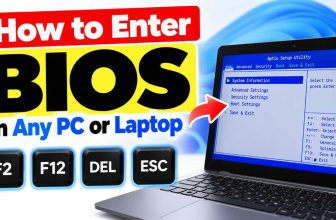
setup.exe, and choose to keep personal files and apps when prompted. - Clean install: Boot from the USB drive (you may need to change boot order in BIOS/UEFI or use a one-time boot menu key like F12, Esc, or Del depending on your manufacturer), then follow the on-screen setup wizard. This wipes the drive, so back up your data first.
Either way, expect the PC to restart multiple times during setup — that’s normal.
Activation
- If you’re upgrading a genuinely licensed Windows 10 machine, activation typically happens automatically once you’re online and signed into the correct Microsoft account.
- If you’re doing a clean install on new hardware or a machine without an existing license, you’ll be prompted for a product key during setup, or you can skip that step and activate later from Settings → System → Activation.
- Genuine Windows 11 keys can be purchased directly from Microsoft’s store or from authorized retailers. I’d steer clear of steeply discounted “lifetime key” sellers on marketplaces or forums — many of these are either invalid, tied to volume-license or MSDN keys not meant for resale, or paired with modified/pre-cracked ISOs that carry real malware risk. If a deal looks too cheap to be legitimate, it usually is.
A note on Windows 10’s end of support
Windows 10 (version 22W2) reached the end of mainstream support in October 2025. If you’re still on Windows 10, Microsoft is offering Extended Security Updates for eligible devices — critical and security patches only, with an enrollment window that varies somewhat by region, so it’s worth checking the current Microsoft page for your country rather than relying on older articles. If your hardware can run Windows 11, moving over is generally the better long-term option since ESU doesn’t include feature updates or general support.
Quick troubleshooting tips
- PC Health Check says “This PC can’t run Windows 11”: usually a TPM or Secure Boot setting disabled in BIOS/UEFI, or genuinely incompatible hardware. Check your motherboard manufacturer’s instructions for enabling TPM 2.0 (sometimes listed as “PTT” on Intel or “fTPM” on AMD).
- Download link stopped working: generated ISO links expire after a while — just go back to the Microsoft page and generate a new one rather than reusing an old saved link.
- Setup errors mid-installation: Microsoft maintains a “Get help with Windows upgrade and installation errors” support page with fixes for common error codes.
If you tell me your current setup — what you’re running now, whether you’re upgrading in place or doing a clean install, and roughly how old your hardware is — I can help you figure out the specific path and settings that’ll work best for your machine.